Climate Risk Adjustments for Real Estate Portfolio Management
A property can look stable on a rent roll and still carry climate risk that has not reached the spreadsheet yet. A clear sky on acquisition day says little about future heat stress, insurance limits, flood exposure, wildfire smoke, tenant disruption, or capital needs.
Climate risk is no longer a side note in real estate portfolio management. It affects underwriting, asset plans, lender questions, insurance renewals, exit values, and tenant demand. The shift is not only about extreme events. It is also about gradual changes, such as hotter summers, heavier rainfall, water stress, and stricter building rules.
The practical goal is not to predict every event. It is to make better decisions under uncertainty. That means adding climate risk to the same management cycle used for debt, occupancy, maintenance, taxes, and capital planning.
This article is for informational purposes only and is not financial, legal, insurance, tax, or engineering advice.
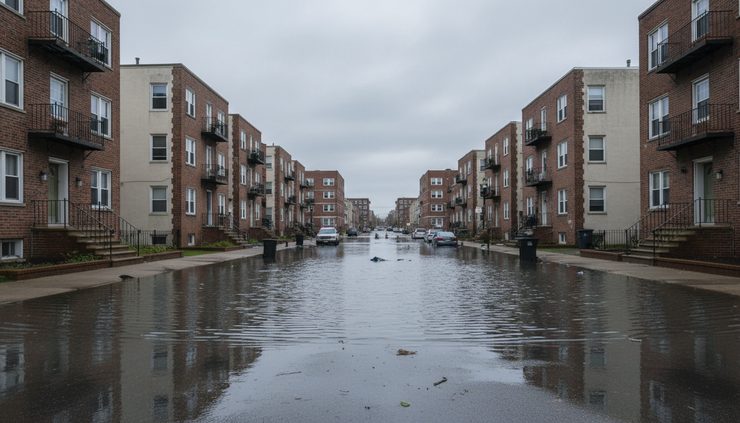
Climate risk now belongs in the core portfolio model
Real estate investors have always dealt with weather. The difference now is frequency, severity, and market response. A storm, wildfire, or heat wave can create direct damage, but the second-order effects often matter just as much.
Insurance may become more expensive or harder to place. Lenders may ask for stronger due diligence. Tenants may prefer buildings with better backup power, indoor air quality, cooling, and flood protection. Local governments may raise building standards or change zoning rules. Buyers may discount assets with unclear exposure.
Climate risk usually falls into three practical groups.
Risk type | What it means for real estate | Common portfolio impact |
Acute physical risk | Event-driven hazards such as floods, hurricanes, hail, wildfire, wind, and severe storms | Damage, downtime, deductibles, tenant displacement, repair delays |
Chronic physical risk | Long-term shifts such as heat, drought, sea level rise, and heavier rainfall | Higher operating costs, faster equipment wear, lower comfort, higher capital needs |
Market and transition risk | Changes in rules, insurance, lending, buyer demand, and tenant expectations | Lower liquidity, higher compliance costs, valuation pressure |
The mistake is treating climate risk as a single score. A national multifamily portfolio, for example, may have one property exposed to flash flooding, another exposed to wildfire smoke, and another exposed to heat stress. Each needs a different response.
A better approach separates risk into asset-level exposure, financial impact, and management action. If a risk does not change an investment decision, budget, or operating plan, the analysis is incomplete.
Start with exposure, then move to financial materiality
Climate reports can produce long lists of hazards. Some are useful. Some are too broad to guide action. The key is to connect exposure with actual business impact.
A coastal property with flood exposure may not face the same risk as a similar property on higher ground with modern drainage and elevated systems. A warehouse in a hot region may have manageable exposure if it has a reflective roof, efficient cooling, and tenants with low temperature sensitivity. A garden apartment near vegetation may have wildfire exposure, but site maintenance and defensible space can lower loss potential.
Useful climate review starts with asset-level questions:
Which hazards are relevant to this exact location?
What parts of the property would fail first?
How long could the asset operate after an event?
What would repairs cost, and who would be available to do the work?
Would insurance cover the likely loss, and at what deductible?
Would tenants renew if disruption became more common?
Would a buyer price this risk differently in five years?
The answers should feed into underwriting. Climate risk adjustments for real estate portfolio management work best when they change specific assumptions, not when they sit in a separate report.
For example, an owner might adjust:
Capital expenditures
Add flood barriers, roof upgrades, drainage work, cooling improvements, air filtration, fire-resistant materials, or backup systems.
Operating expenses
Reflect higher insurance premiums, energy demand, water costs, maintenance, inspections, and emergency planning.
Revenue assumptions
Test downtime, rent concessions after a disruption, tenant retention, and demand for better-protected assets.
Exit cap rates
Apply more caution where future buyers may demand a discount for hard-to-insure or high-exposure locations.
Hold periods
Revisit whether the planned investment horizon still fits the risk profile and capital needs.
This does not mean every exposed asset should be sold. Some risks can be reduced at a reasonable cost. Others can be insured against, at least partly. Some may be acceptable because returns compensate for the added uncertainty. The point is to price the risk instead of discovering it later.

Use scenarios to test the portfolio before conditions change
A single base case can hide weak spots. Scenario testing helps show how much stress a portfolio can absorb.
The scenarios do not need to be complicated at first. They should be clear enough for investment, asset management, and insurance teams to use. A strong set might include:
A severe storm that closes one property for several weeks
A flood event that triggers a large deductible and repair delay
A sharp insurance premium increase across several markets
A summer heat wave that raises utility use and strains HVAC systems
A wildfire smoke season that affects tenant comfort and operating plans
A local code change that requires building upgrades before sale or refinancing
Each scenario should translate into dollars, time, and decisions. What is the loss of rent? How much cash is needed? Which contracts activate? Which tenants are most affected? Does the asset still meet return targets?
At portfolio level, scenario testing can reveal concentration risk. A fund may seem diversified by property count and tenant mix, yet still carry heavy exposure to one hazard. For example, assets in different states may all rely on insurance markets under pressure. Several properties may sit in areas with aging stormwater systems. Multiple buildings may need major HVAC replacement as summers become hotter.
A simple portfolio heat map can help, as long as it uses plain categories and clear next steps.
Portfolio category | Typical finding | Management response |
Low current concern | Limited known exposure and manageable insurance terms | Monitor during annual planning |
Moderate concern | Some hazard exposure or rising operating costs | Add targeted capital projects and track insurance changes |
High concern | Material exposure, high deductibles, or likely tenant disruption | Reprice, retrofit, reduce concentration, or consider sale |
Strategic watchlist | Risk may rise due to regulation, market perception, or infrastructure limits | Review before refinance, major lease, or hold-sell decision |
This kind of grouping supports better capital allocation. It also helps avoid overreacting to one dramatic event while missing slow-moving risks across the whole portfolio.
Adjust insurance, due diligence, and capital planning together
Insurance is often the first place climate risk shows up in the budget. Premium increases, higher deductibles, exclusions, and tighter underwriting can all change asset performance. In some markets, coverage that was once routine may require more documentation, more carriers, or different risk retention.
Insurance should not sit apart from property strategy. If an insurer identifies roof condition, flood protection, fire safety, or drainage as a concern, that feedback belongs in the capital plan. If a planned retrofit could improve insurability or reduce loss severity, it should be evaluated against both risk reduction and long-term value.
Due diligence also needs an update. Traditional property condition reports, environmental reviews, and zoning checks still matter. Climate-aware diligence adds another layer.
Before acquisition or refinancing, review:
Federal, state, and local flood information, while recognizing that maps may not capture all rainfall risk
Site elevation, drainage paths, basements, parking areas, and critical equipment locations
Roof age, wind resistance, drainage capacity, and maintenance records
Heat exposure, shading, HVAC capacity, insulation, and tenant comfort risks
Wildfire interface, vegetation, access roads, and local fire response conditions
Water availability and restrictions in drought-prone areas
Local building performance rules and likely retrofit needs
Claims history, insurance terms, deductibles, and exclusions
No single report answers every question. Climate data is useful, but property-level inspection often reveals the fixes that matter most. A flood model may flag exposure, but a site visit may show that electrical equipment sits below grade. A heat map may identify a hot area, but maintenance records may show HVAC systems already near failure.
The best capital plans rank projects by urgency and value. Life safety and code compliance come first. Next come projects that reduce likely damage or downtime. Then come upgrades that improve comfort, operating costs, and market position.

Make climate risk part of governance and reporting
Climate risk management fails when it depends on one annual memo. It works better when teams assign ownership, set review dates, and tie findings to decisions.
A practical governance process can be simple:
Build an asset-level risk register.
Assign each material risk to asset management, property management, acquisitions, insurance, or capital planning.
Set review markers, such as annual budgets, renewals, refinancing, major leases, and planned sales.
Track completed mitigation work and remaining exposure.
Report portfolio concentrations to the investment committee or ownership group.
The risk register should avoid vague language. “Flood risk” is too broad. A better entry states that floodwater could enter the garage, damage elevators, and interrupt access to ground-floor units. That level of detail makes it easier to price the fix.
Reporting should also distinguish between exposure and readiness. An asset in a hurricane-prone area may be better prepared than an inland asset with poor drainage and no emergency plan. A property in a hot climate may perform well if cooling systems, roof design, and tenant communication are strong.
Good reporting answers four questions:
What changed since the last review?
Which risks are now financially material?
Which assets need capital, insurance attention, or closer monitoring?
Which investment decisions changed because of the findings?
This keeps reporting tied to action. It also supports conversations with lenders, investors, insurers, and buyers who increasingly ask how owners identify and manage climate exposure.
Rebalance with location, asset type, and tenant use in mind
Portfolio adjustment does not always mean selling high-risk assets. It may mean changing the mix of risk, return, and resilience.
Location still matters, but broad regional labels can mislead. A property in a coastal metro may sit outside major flood pathways. An inland property may face severe convective storms, heat, drought, or wildfire smoke. Local infrastructure, elevation, building age, and emergency response can matter as much as the market name.
Asset type matters too. Climate stress hits each property differently.
Asset type | Climate-sensitive issues to review |
Multifamily | Habitability, cooling, flood access, tenant displacement, insurance deductibles |
Industrial | Roof damage, drainage, heat inside large spaces, logistics disruption |
Retail | Customer access, storm downtime, tenant sales disruption, signage and roof exposure |
Office | Energy use, ventilation, commuting disruption, building performance rules |
Hospitality | Guest cancellations, coastal exposure, heat, water use, business interruption |
Tenant use adds another layer. A climate-controlled warehouse, senior housing property, grocery store, or medical tenant may have lower tolerance for downtime than a standard dry storage building. Lease language, service obligations, and backup systems matter.
Rebalancing can take several forms:
Sell or reduce exposure where risk is rising faster than returns
Buy newer or better-pretected assets in markets with strong demand
Diversify insurance exposure across carriers, geographies, and hazard types
Fund resilience projects before refinance or sale
Avoid adding assets that duplicate the same unpriced risk
Set acquisition thresholds for flood, wildfire, heat, wind, and insurance stress
The strongest portfolios will not be risk-free. They will be clearer about which risks they hold, why they hold them, and what they are doing about them.

The takeaway is to price what the climate can change
Climate risk is now part of real estate performance. It affects cash flow, capital needs, insurance, financing, tenant demand, and exit value. The right response is not panic. It is discipline.
Start with the assets. Identify the hazards that matter at each property. Translate those hazards into repair costs, downtime, insurance terms, operating expenses, and tenant effects. Test scenarios at the portfolio level. Fund the improvements that reduce likely loss. Revisit concentration risk before acquisitions, refinancings, and sales.
A good climate risk process makes one thing clear: the portfolio is not just a set of buildings. It is a set of exposures, protections, contracts, and decisions. Managing those pieces together is how real estate owners keep risk visible before the weather, market, or insurance renewal forces the issue.


